

Cre8Virals logoCre8Virals
Tactical Mastery • 2026 Guide

Keyword Research YouTube: Titles, Descriptions & Tags

9 min read
April 24, 2026
Cre8virals Team
YouTube Metadata Architecture

Beyond the Search Engine

The Psychology of Metadata clicks

Metadata isn't just for bots. While keywords help the algorithm index your video, the packaging of those keywords is what determines if a human clicks. In 2026, the most successful creators use a "Dual-Layer" metadata strategy: **Optimization for Discovery** and **Engineering for Emotion**.

The 2026 Metadata Gold Standard:
  • Titles: High urgency, keyword-first, under 60 characters.
  • Descriptions: Narrative-driven, chapter-indexed, first-line hook.
  • Tags: Semantic disambiguation for niche-specific surfacing.

Step 1: The Viral Title Formula

Catching the Viewer's Eye

A great title needs to perform two jobs simultaneously: tell YouTube what the video is about and tell the user why they should care. Most creators fail by doing one but not the other.

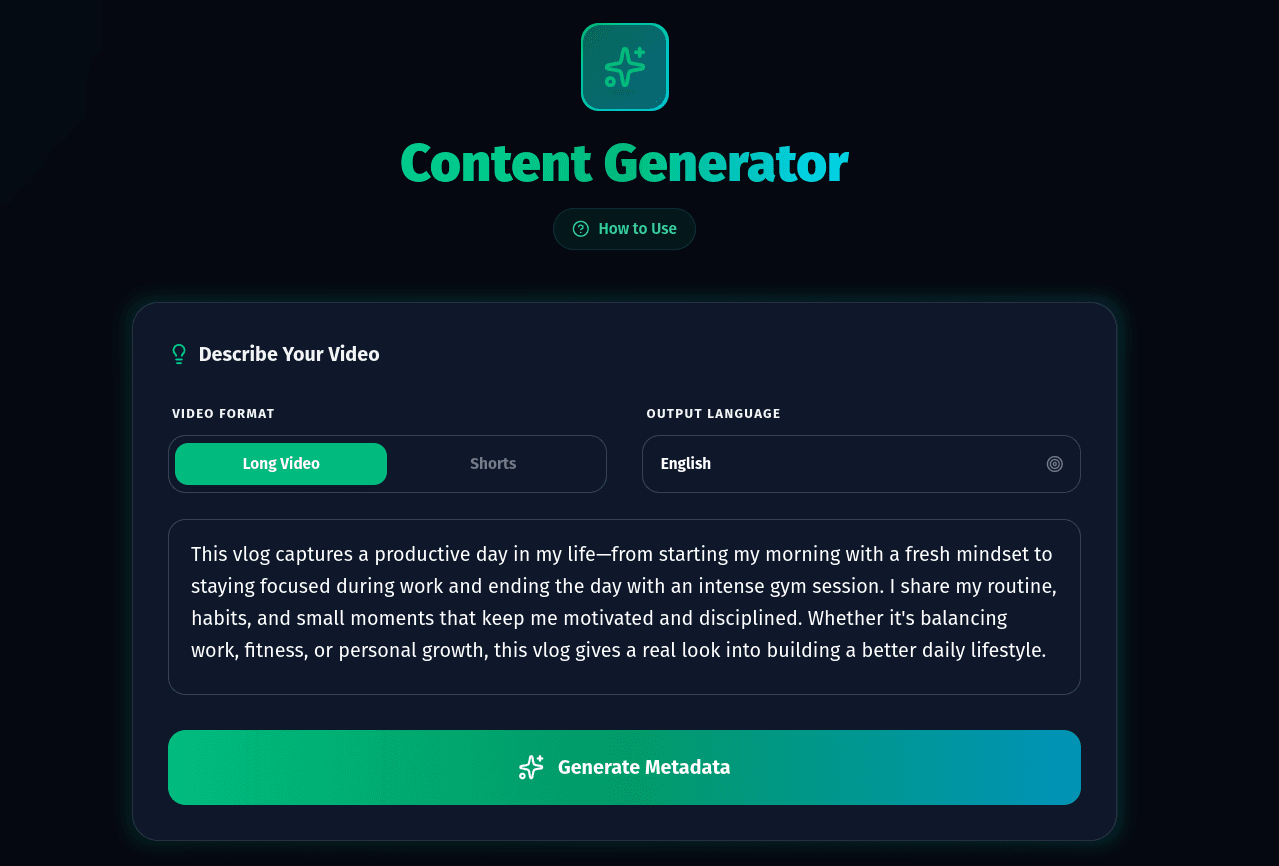
How Cre8virals Generates High-CTR Titles

Our AI analyzes current trending patterns across your niche to suggest titles that balance keyword density with "Curiosity Gaps."

AI Title Generation Case Study
The 'Negative' Hack:

Data shows that titles addressing a fear or mistake (e.g., 'Stop doing X') often perform 15-20% better than 'How to' titles for established creators.

Step 2: Descriptive SEO Architecture

Feeding the Recommendation Engine

Your description is the longest piece of text the YouTube AI gets to analyze. It uses this to create semantic connections between your video and other successful videos in the niche.

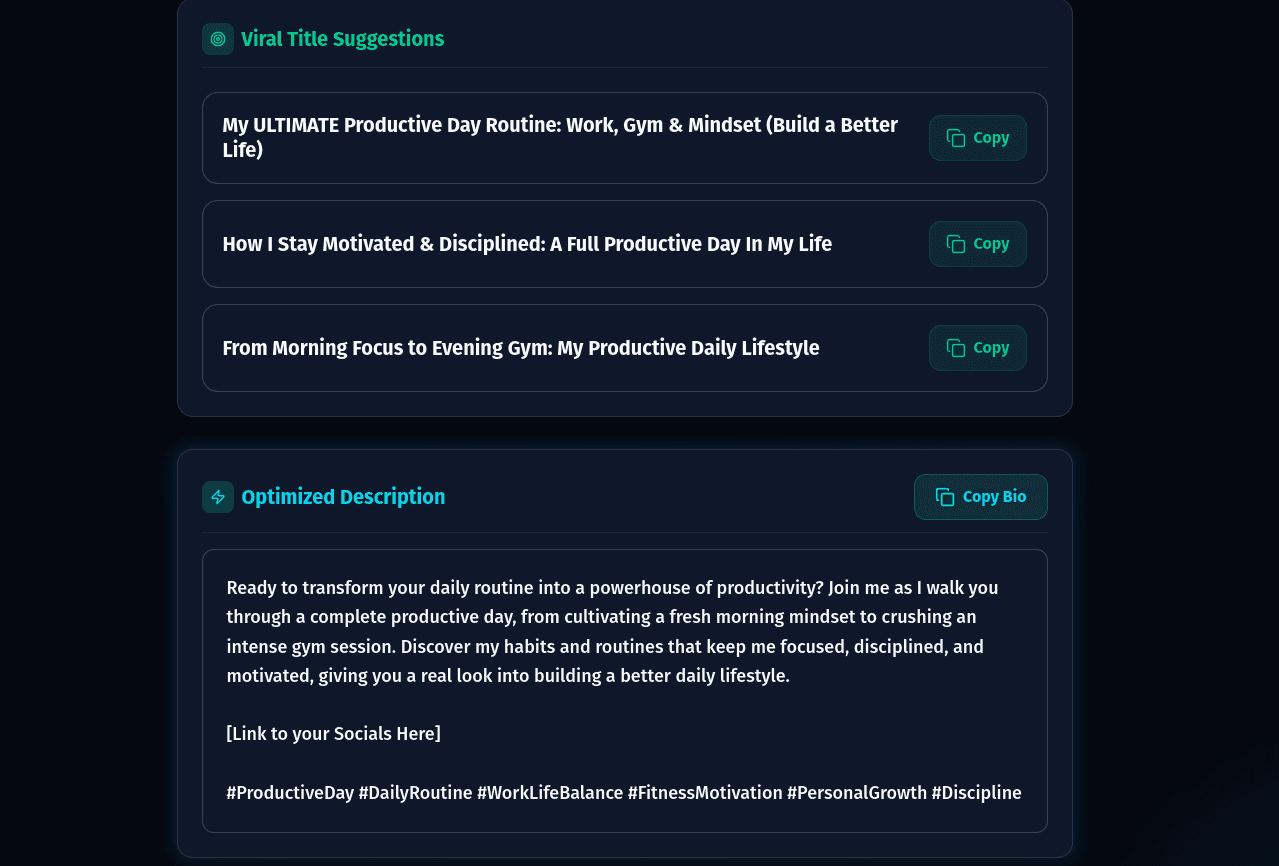
Automated Description Structuring

We structure your descriptions to ensure the most important SEO signals are "above the fold" while providing full context for Google search result parsing.

AI Description Architecture Case Study
The Chapter Signal

Always include chapters. They allow your video to appear in Google Search for highly specific questions, even if they aren't the main topic of your video.

Social Proofing

Include links to related videos on your channel in the middle of your description to keep the user session active.

Step 3: Tactical Tag Clusters

The Final Disambiguation Layer

Tags are your insurance policy. They help YouTube distinguish between "Java Tutorial" (programming) and "Java Tutorial" (coffee brewing). Use them to group your video into specific clusters.

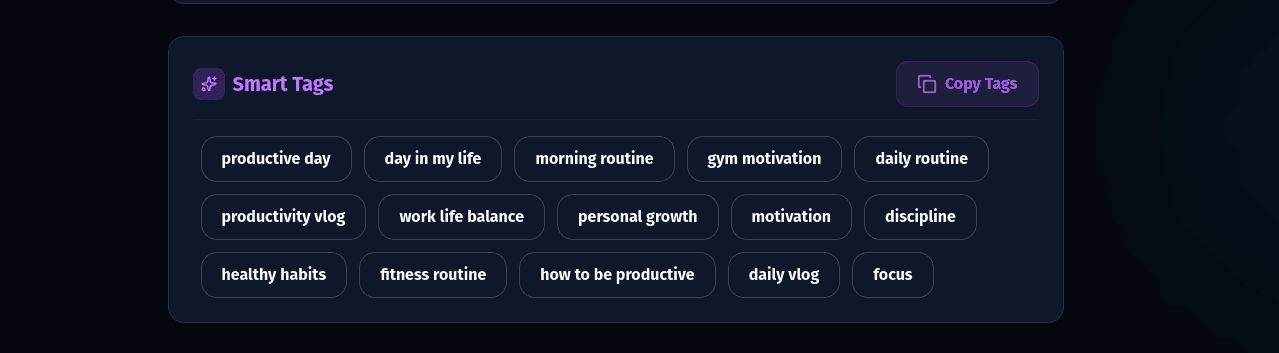
Context-Aware Tag Generation

Cre8virals generates weight-adjusted tags that cover primary, secondary, and broad categorical terms to maximize your surfacing potential.

AI Tag Clustering Case Study
The Tag Rule:

"Stop using 500 tags. Focus on 10-15 highly relevant clusters. Any tag that isn't directly related to your spoken content is just noise for the algorithm."

Step 4: AI Overviews & Answer Engine Optimization

Ranking Beyond the YouTube Search Bar

In 2026, many of your viewers won't find your video through a traditional YouTube search. They will find it through **Modern Answer Engines and Search Platforms** that "query-mine" YouTube descriptions to provide direct answers to users.

Optimizing for the 'Snippet':

To rank in AI search results, your description must contain a "Definition Block." This is a 2-3 sentence paragraph early in the description that defines the core topic clearly and concisely.

"Keyword Research for YouTube is the strategy of identifying high-intent video topics that satisfy user curiosity while aligning with the current 24-hour trending patterns of the algorithm."

By providing this clear definition, you make it significantly easier for Large Language Models (LLMs) to identify your video as the definitive source for a specific answer. This "Answer Engine Optimization" (AEO) can account for up to 30% of your external traffic in 2026.

The Q&A Pattern

Structure your chapter titles as questions (e.g., 'How to find viral tags?'). This signals to the AI that your video contains a direct solution to a user query.

Resource Linking

AI engines prioritize videos that link to authoritative sources or provide downloadable materials, viewing them as more trustworthy 'Educational' assets.

Step 5: The Evergreen Metadata Audit

Reviving Dead Videos with Data

YouTube SEO is not a "fire and forget" system. Search trends evolve, and keywords that were trending in January might be irrelevant by June. The most successful channels at Cre8virals perform a **Metadata Audit** every 90 days.

The 90-Day Checklist:
  • 1
    Check CTR Heatmaps: If your CTR has dipped below 4%, it's time for a 'Visual Pivot'. Swap the thumbnail and front-load a different keyword in the title.
  • 2
    Refresh Description Anchors: Add links to your *newer* videos inside the descriptions of your top-performing old videos. This passes 'Authority Juice' through your channel's ecosystem.
  • 3
    Scan for 'Zombie Tags': Tags that no longer represent current trending behavior (e.g., outdated tool names) should be swapped for high-velocity modern terms.

The 'Second Spike' Effect

We have seen videos with 1,000 views suddenly jump to 100,000+ views just by updating the metadata to align with a new related trend. The algorithm is always watching; refreshing your information signals that your content is still relevant and accurate.

Pro Tip: Use the 'Updated (2026)' suffix in your title to instantly increase CTR on older evergreen content.

Conclusion: The Metadata Advantage

Winning Before the Upload

Keyword research is the blueprint, but metadata is the construction. By using AI to automate the creation of viral titles, descriptions, and tags, you are giving your video the highest possible probability of success before you've even hit "Publish."

"Modern YouTube SEO is about letting AI handle the metrics so you can handle the creativity."

Don't waste hours chasing the latest algorithm shift. Use tools that are built to adapt for you.

Frequently Asked Questions

Q:Should I focus more on titles or tags?

A:

Titles are significantly more important for CTR and initial indexing. Tags are primarily for disambiguation and helping YouTube categorize your video within a specific niche.

Q:How long should my YouTube description be?

A:

In 2026, the 'sweet spot' is 300-500 words. The first 200 characters are critical for Search, while the rest provides context for Google's AI and Answer Overviews.

Q:Can I change my metadata after the video is live?

A:

Yes. In fact, if a video is underperforming (less than 3% CTR), pivoting your title and thumbnail within the first 48 hours is a recommended strategy to 'restart' the algorithmic test.

Q:Does the metadata generation only work in English?

A:

While Cre8virals defaults to high-authority English results, you can generate viral metadata in any language by simply selecting your preferred language or adding it directly to the Cre8virals generator prompt.

Optimize Your
Metadata in Seconds.

Our AI analyzes 24-hour trending data to generate titles, descriptions, and tags that are proven to drive clicks.