
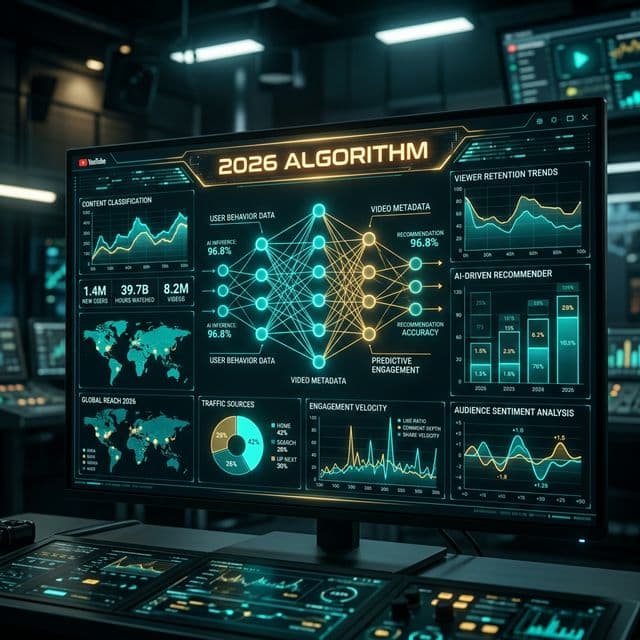
April 20, 2026•9 min read
YouTube Algorithm Hacks 2026
Discover the 2026 YouTube algorithm hack. Learn how to trigger the 'Candidate Generation' engine and build a 'Retention Ripple' that guarantees views.
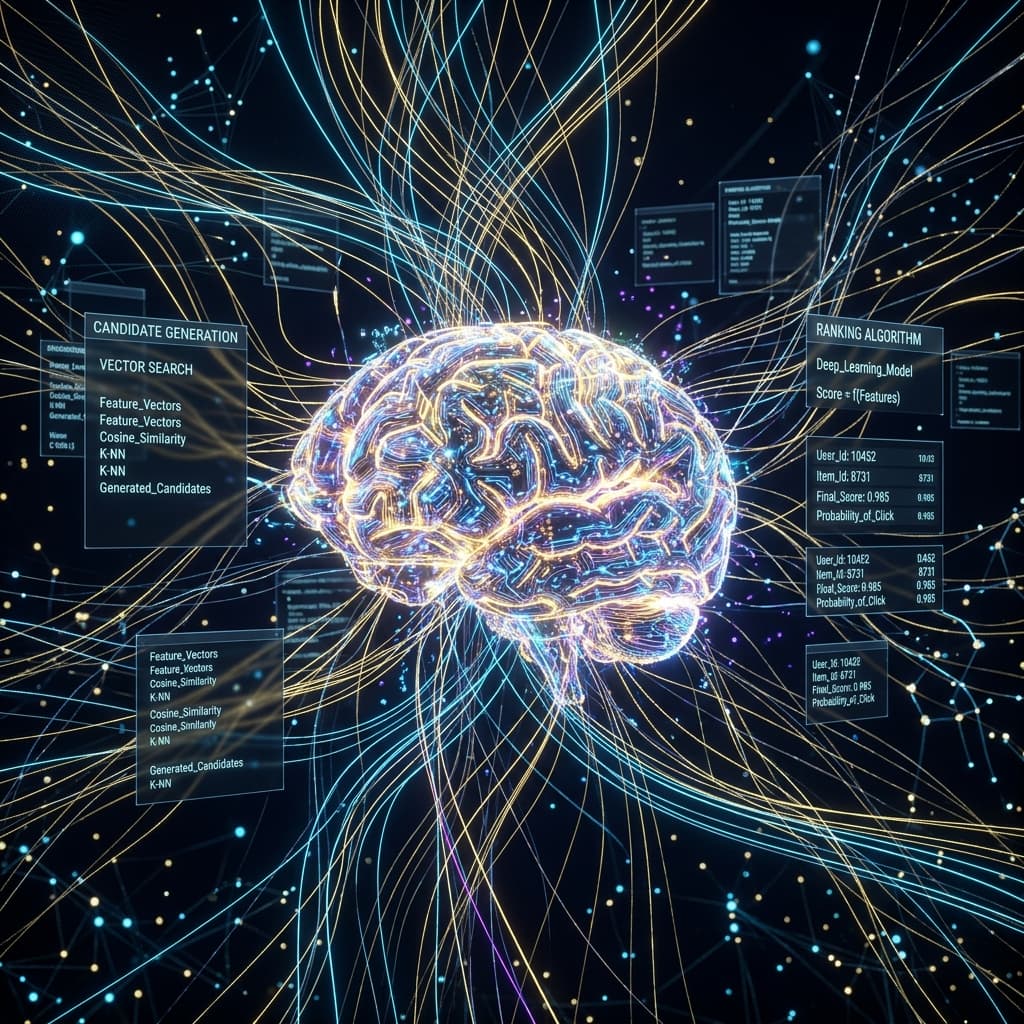
When creators search for "YouTube SEO," they often think of simple metadata tweaks like keyword tag stuffing or copy-pasting descriptions. In 2026, real YouTube SEO is inextricably linked with how the YouTube recommendation algorithm processes user context, search behavior, and viewer satisfaction. The algorithm's search and discovery networks are a highly structured, two-stage deep learning pipeline designed to index, rank, and present content based on empirical audience satisfaction signals.
To master YouTube SEO in 2026, you must stop separating "metadata optimization" from "algorithmic behavior." The algorithm's search engine evaluates your SEO parameters (titles, description, transcripts, tags) during the initial **Candidate Generation** phase, while measuring real-time visual expectations (thumbnail click-through rates) and retention values (Average View Duration) during the subsequent **Ranking** phase.
In this highly structured, data-backed playbook, we will guide you step-by-step through the precise mechanics of YouTube's search and recommendation algorithm, detail how your SEO metadata dictates your video's vector path, and show how the **Cre8Virals Creator Suite** acts as your automated SEO co-pilot to construct high-CTR thumbnails, write predictive high-CTR titles, and format audience retention scripts for explosive organic channel scaling.
Decoding the Two-Tower Neural Network
At any given second, YouTube must evaluate hundreds of millions of public video uploads to recommend a tailored list of candidates for a single viewer. To execute this at an immense scale, the algorithm utilizes a **Two-Tower Neural Network Architecture** built for high speed and efficiency:
Computes a dense vector embedding representing the user's historical actions (previous search terms, video click history, return frequencies, device characteristics, and localized context).
Computes corresponding vector embeddings representing the video's details (metadata keywords, transcription data, visual frame embeddings, and channel categorization anchors).
By calculating the mathematical closeness—known as **Cosine Similarity** or **Approximate Nearest Neighbor Search**—between these two towers, the candidate generation phase filters the entire platform library down to a manageable cohort of just a few hundred candidate videos in less than a millisecond.
Multi-Objective Optimization for Viewer Satisfaction
Once the Two-Tower system extracts a few hundred candidates, YouTube applies a much more complex, computationally expensive Deep Neural Network (DNN) to score and prioritize them:
In 2026, the ranking system has shifted from maximizing raw watch time to executing **Multi-Objective Optimization for Viewer Satisfaction**. It scores each candidate video by predicting three core probability vectors:
The probability that a viewer will click on the video based on packaging synergy (the combined message of the title, thumbnail, and topic).
The expected Average View Duration and retention percentage, confirming if the video's pacing holds attention.
The likelihood of positive viewer feedback, estimated from user surveys, likes, shares, return visits, and session depth contribution.
A video that receives a high CTR but suffers a low expected satisfaction score (due to high bounce rates or negative user survey signals) is quickly deprioritized, whereas videos that drive session depth and keep viewers on the platform are pushed to high-traffic home feeds.
How to optimize your title, description, and tags using Cre8Virals' generation workspace.
The AI Content Generator begins by analyzing your video's core concept. Instead of stuffing separate keywords, you describe your video naturally. Our system extracts semantic parameters to align directly with the User Tower vector filters.
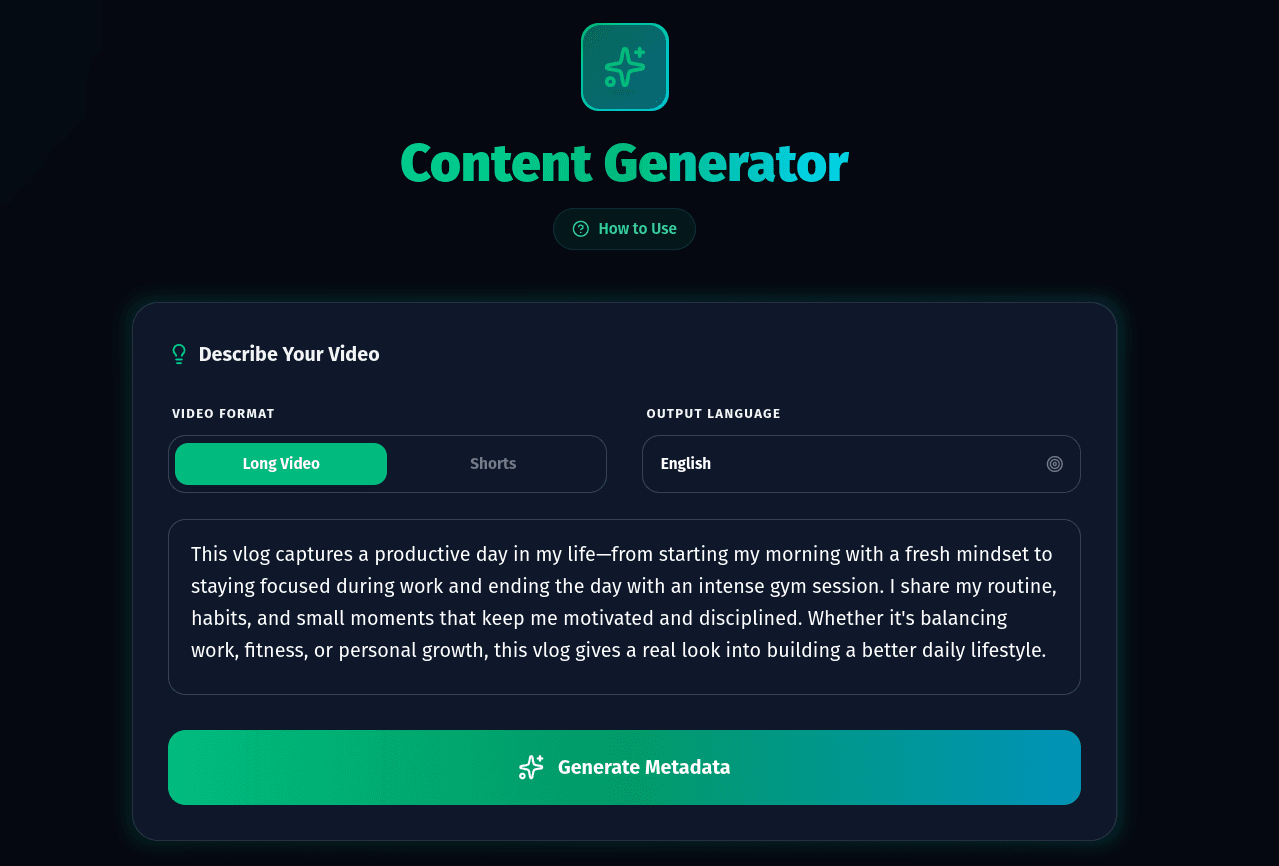
Next, AI tools generate optimized title options and detailed video descriptions. It ensures that the primary keyword vectors from your title are naturally integrated into the first 150 characters of the description, making it easy for the candidate selection engine to classify your content.
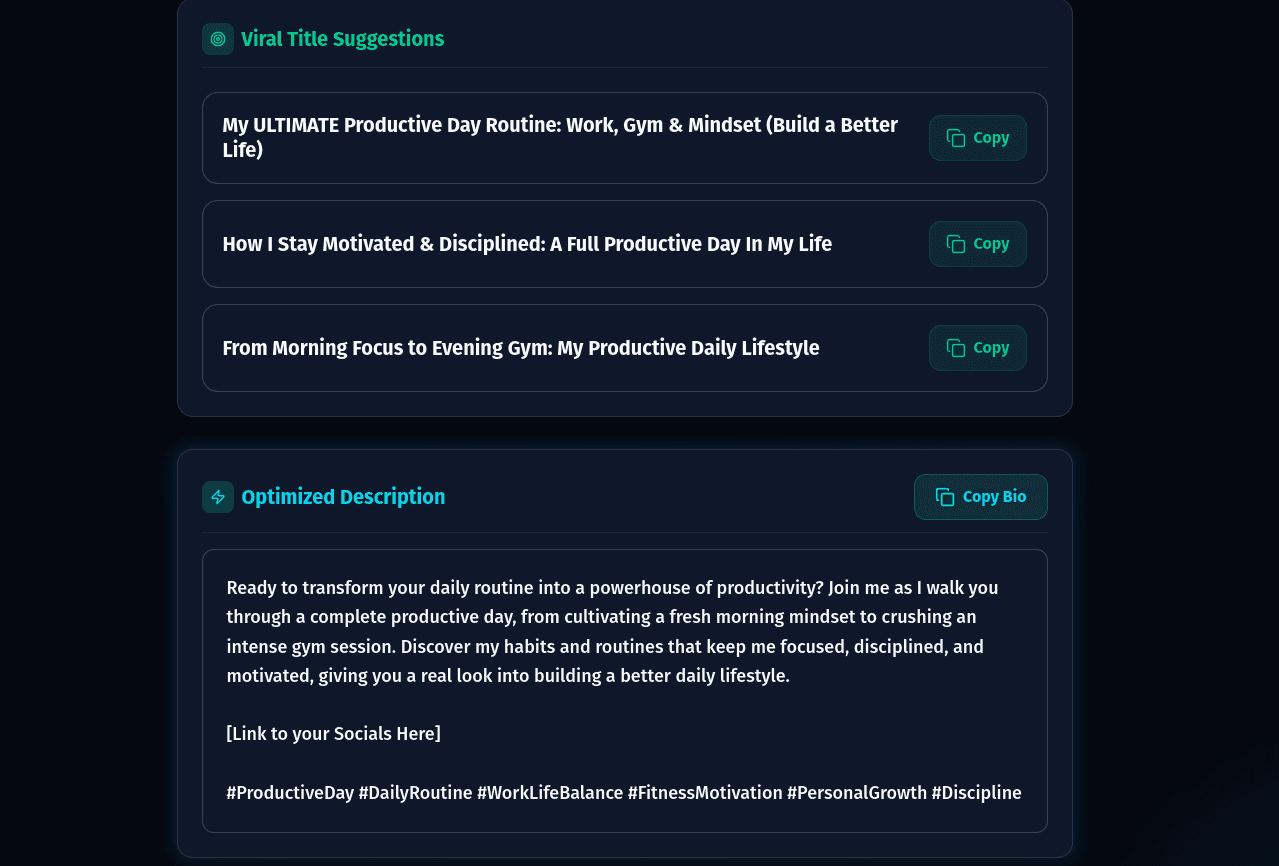
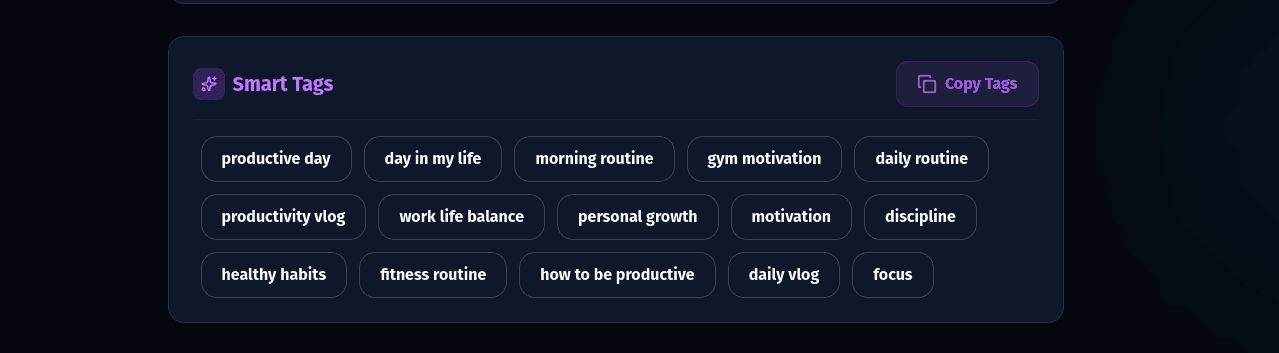
Finally, the tool generates semantic tag groups. By exporting this list, you can bridge the gap in co-visitation networks, ensuring your video appears in the Suggested sidebars of top-performing videos in your niche.
Practical Engineering Guidelines for Growth
To satisfy YouTube's multi-objective ranking DNN, structure your channel's workflow around these four proven optimization guidelines:
The ranking DNN evaluates the first **30 seconds** of your upload very heavily. Ensure you address the core promise of your title and thumbnail immediately, avoiding long, generic channel intros to maintain AVD.
Group related video uploads into playlists and use interactive video cards to point viewers directly to the next installment. This maximizes your channel's **Session Depth Contribution**, which is highly favored by the algorithm.
Leverage A/B thumbnail testing inside YouTube Studio to find the absolute highest-converting packaging. Cre8Virals makes A/B testing simple by automatically generating 4 distinct visual variants.
Do not upload highly divergent content formats on a single channel. Sticking to a consistent niche helps the candidate generation tower stabilize your channel's user embedding vector.
Replacing Guesswork with Neural Engineering
You don't need to struggle to understand algorithmic details manually. Cre8Virals integrates these complex neural filters directly into a suite of powerful creator tools:
Our system actively scans your niche for 'outlier videos'—uploads getting 5x to 50x the average views of a competitor's baseline subscribers—to isolate high-velocity title and structural patterns.
Input your script text to receive formatting improvements, hook timing triggers, and pacing analysis to keep your audience retention charts flat.
To satisfy the algorithm's critical **Expectation Match (CTR)** filter, advanced suites feature an automated custom thumbnail builder. By analyzing your video title, our generator:
Prior to hitting the publish button on any video, run through this checklist to ensure complete system alignment:
Written and reviewed by the Cre8Virals editorial team — YouTube growth strategists, metadata researchers, and algorithmic SEO specialists with over 5+ years of experience analyzing viral video patterns and channel monetization.
The single biggest mistake is optimizing solely for clicks while ignoring post-click satisfaction. Relying on extreme clickbait with thin content causes immediate audience bounces. The 2026 ranking algorithm uses multi-objective optimization that heavily penalizes rapid bounce rates. If your Average View Duration (AVD) is low and your video triggers an early platform exit, the system terminates your candidate delivery pathway, halting impressions entirely.
Processing hundreds of millions of videos for billions of active users in real-time is computationally impossible using standard database queries. To solve this, YouTube implements a Two-Tower neural network model. The User Tower computes a dense mathematical vector (embedding) of the user's current context and historical preferences. The Video Tower creates a corresponding embedding for every video in the catalog. The system then runs a Cosine Similarity/Approximate Nearest Neighbor search, instantly identifying a cohort of a few hundred videos that perfectly align with the user's interests in less than a millisecond.
Yes, because the formats serve distinct consumption environments. Long-form video recommendations prioritize search intent, suggested sidebar co-visitation, and deep browse feeds where click expectation (CTR) and watch session contribution are heavily weighted. Conversely, YouTube Shorts compete in a fast-scrolling contextual feed where viewers make instantaneous stay-or-swipe decisions. The Shorts algorithm focuses heavily on 'Stay vs. Swipe Ratios' and rapid contextual relevance scores rather than traditional click-through-rates.
YouTube's core engineers are constantly running active A/B tests and tuning parameters. While minor contextual weight adjustments occur daily, major algorithmic structural updates (such as shifting focus to direct viewer satisfaction surveys or co-visitation vector updates) occur roughly 2 to 3 times a year. Cre8Virals tracks these macro velocity changes automatically to keep our title, script, and visual generator suites fully aligned.
Unlock the professional creator suite built to align your scripts, titles, tags, and thumbnails with deep learning recommendation systems.
Discover the 2026 YouTube algorithm hack. Learn how to trigger the 'Candidate Generation' engine and build a 'Retention Ripple' that guarantees views.
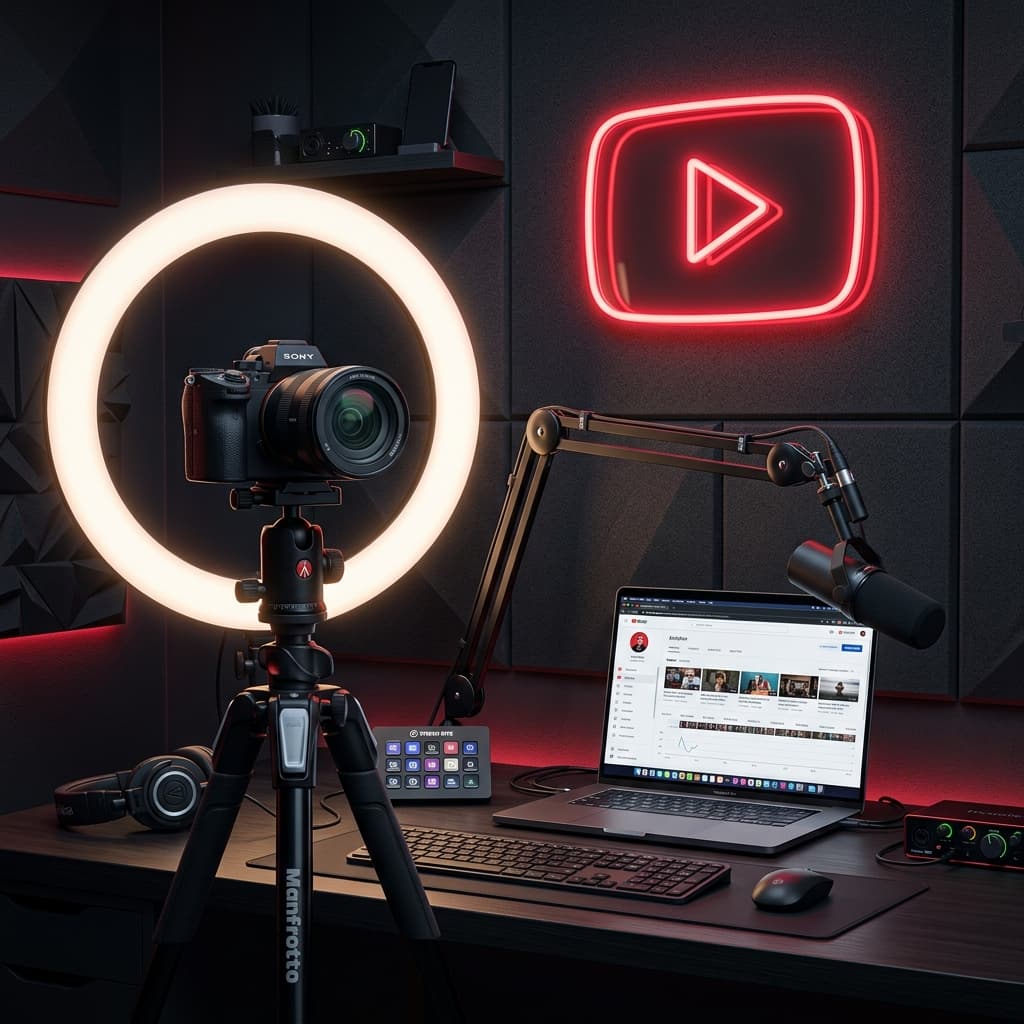
Learn how to start a YouTube channel from scratch in 2026. Discover the organic growth strategies, equipment essentials, SEO optimization, and channel setup secrets to stand out and monetize fast.
Discover the exact strategies top creators are using to leverage artificial intelligence for viral growth.